Quick Overview
Integrated Business Solutions (IBS) are systems that unify software, tools, and services across a business, connecting departments, automating tasks, and enabling seamless data flow. They help organisations operate smarter, reduce inefficiencies, and make faster, data-driven decisions.
This blog will walk you through:
✅ What IBS are and how they connect teams and data
✅ Key benefits: efficiency, better decisions, customer satisfaction, scalability, cost savings, compliance
✅ Common types: ERP, CRM, finance systems, HRMS, e-commerce, project management
✅ Core features: centralised data, automation, dashboards, access control, cloud integration
✅ Challenges: cost, complexity, training, data migration, compatibility
✅ How IBS can transform operations and give businesses a competitive advantage
In today’s fast-paced, digitally connected world, businesses face growing pressure to operate faster, smarter, and more efficiently. Whether you’re running a small startup or managing a large corporation, juggling different departments, software platforms, and processes can quickly become overwhelming. That’s where Integrated Business Solutions (IBS) come in.
But what exactly does “integrated business solutions” mean? And why is everyone—from tech giants to small local businesses—talking about them?
In this blog, we’ll break down the definition of integrated business solutions, explore their key advantages, and look at the different types available to modern organisations. If you’re looking to improve productivity, eliminate inefficiencies, and align your business goals, this is essential reading.
What Are Integrated Business Solutions?
✅ Definition:
Integrated Business Solutions refer to a combination of software, systems, and services that work together seamlessly to manage and optimise all aspects of a business’s operations. Instead of using disconnected tools for sales, accounting, inventory, HR, and customer service, an integrated solution connects them into a unified platform.
It means that:
- Your departments communicate better
- Data flows smoothly between systems
- Tasks are automated
- You gain real-time visibility across the business
Example:
Imagine a retail company. Instead of using separate tools for point-of-sale, inventory tracking, employee scheduling, and customer relationship management (CRM), they use an integrated solution like SAP Business One or Odoo that brings all those elements into one dashboard.
Why Businesses Need Integrated Solutions
In a typical business, departments often work in silos:
- Sales doesn’t talk to finance
- Inventory isn’t synced with marketing
- Customer data is scattered in different platforms
This fragmentation leads to:
- Repeated tasks
- Delayed decisions
- Poor customer experience
- Data inconsistencies
Integrated business solutions solve this by connecting the dots, making the business more agile, collaborative, and profitable.
Key Advantages of Integrated Business Solutions
Let’s dive into the major benefits that businesses enjoy when they implement integrated solutions.
🔹 1. Improved Efficiency and Productivity
When systems talk to each other, data doesn’t need to be entered multiple times. For example:
- A new sale is automatically recorded in accounting
- Inventory updates in real-time
- Invoices are generated without manual input
This reduces manual work, human error, and time spent on repetitive tasks, freeing up your team to focus on high-value work.
🔹 2. Better Decision-Making
With all your business data centralised in one system, you get:
- Real-time dashboards
- Custom reports
- Sales forecasts
- Customer insights
This helps you make faster, data-driven decisions instead of guessing or relying on outdated spreadsheets.
🔹 3. Enhanced Customer Experience
Integrated CRMs and support tools allow you to:
- Track customer interactions
- Personalise communication
- Resolve issues faster
- Automate follow-ups
The result? Happier, loyal customers who feel valued and well-served.
🔹 4. Scalability
As your business grows, you need systems that can keep up. Integrated solutions are often modular—meaning you can start small and add more features as needed (e.g., add HR or eCommerce tools later).
This future-proofs your business without major reinve
🔹 5. Cost Savings
Yes, integrated systems may require upfront investment—but they can lead to significant long-term savings by:
- Reducing software licence duplication
- Lowering IT maintenance costs
- Improving operational efficiency
- Reducing staff turnover due to simpler workflows
🔹 6. Improved Compliance and Security
With integrated systems:
- Data is stored securely and centrally
- Audit trails are easy to track
- Access levels can be managed
- You’re more likely to stay compliant with industry standards like GDPR, ISO, etc.
Types of Integrated Business Solutions
Not all businesses need the same type of solution. Here are the most common categories:
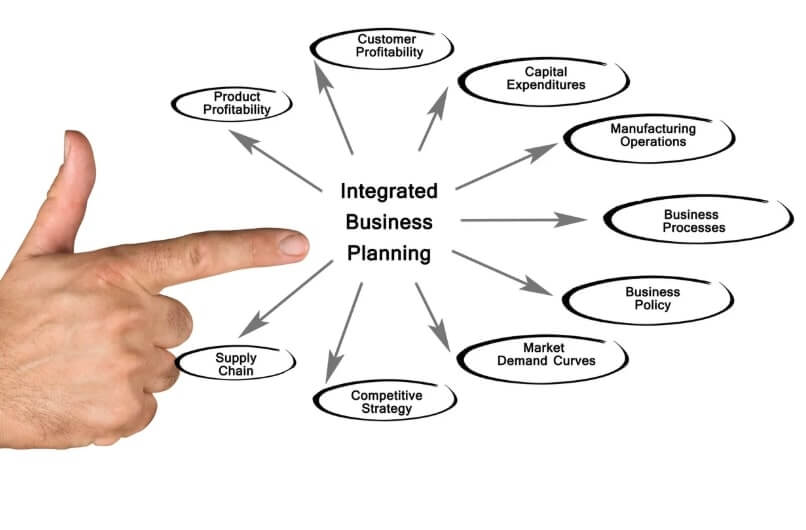
🧩 1. Enterprise Resource Planning (ERP)
ERP systems are the most comprehensive integrated solutions, covering:
- Accounting
- Procurement
- Inventory
- HR
- Manufacturing
- Supply chain management
Popular ERPs: SAP, Oracle NetSuite, Microsoft Dynamics, Odoo
ERP is ideal for mid-sized to large organisations that need end-to-end visibility and control.
🧩 2. Customer Relationship Management (CRM) Integration
CRM systems manage interactions with customers. Integrated CRMs help:
- Sync sales and marketing
- Track leads and conversions
- Analyse customer behaviour
- Coordinate service responses
Popular CRMs: Salesforce, Zoho CRM, HubSpot
Many CRMs now integrate with email, e-commerce, social media, and helpdesk platforms.
🧩 3. Accounting and Finance Systems
These manage payroll, expenses, cash flow, and compliance. Integration with sales and procurement tools helps automate financial reporting.
Examples:
- QuickBooks + Shopify
- Xero + CRM
- Zoho Books + Inventory
This is perfect for small businesses wanting visibility into financial health.
🧩 4. Human Resource Management Systems (HRMS)
HRMS platforms manage:
- Employee records
- Payroll
- Attendance
- Recruitment
- Performance reviews
When integrated with ERP and time-tracking tools, you get a full picture of workforce productivity and costs.
Popular HRMS tools: BambooHR, Gusto, Zoho People
🧩 5. E-commerce Integration
Online retailers benefit from solutions that integrate:
- Inventory
- Orders
- Shipping
- Customer service
- Marketing
This creates a seamless customer experience across online and offline channels.
Example: Shopify + Mailchimp + QuickBooks + Zoho CRM
🧩 6. Project Management and Collaboration Tools
These solutions integrate task management with time-tracking, communication, and resource allocation.
Examples:
- Asana + Slack + Google Drive
- Monday.com + Zoom + Outlook
- Trello + HubSpot + Zapier
This is ideal for agencies, freelancers, or remote teams.

Common Features in Integrated Business Platforms
While features vary, most integrated solutions share:
- Centralised data storage
- Real-time updates
- Automation (e.g., auto-generated invoices, reminders)
- Custom dashboards
- Role-based access
- Third-party app integrations
- Cloud accessibility
The goal is always to connect teams, simplify processes, and reduce data silos.
Challenges and Considerations
Integrated solutions are powerful—but they’re not without hurdles:
⚠️ Cost and Complexity
Some systems can be expensive or complex to implement. Always compare pricing, features, and scalability.
⚠️ Staff Training
Your team will need time to learn new software. Good onboarding and support are crucial.
⚠️ Data Migration
Moving data from legacy systems to a new platform can be tricky. Work with experts or vendors to ensure a smooth transition.
⚠️ Integration Compatibility
Not all tools play nicely together. Make sure your chosen solution supports integrations or APIs for your existing software.
Final Thoughts
In a world where speed, data, and efficiency are everything, integrated business solutions offer a powerful way to streamline operations and gain a competitive edge. Whether you’re a startup looking to manage growth or a large organisation aiming for digital transformation, integrated solutions provide the tools to unify teams, empower decisions, and scale sustainably.
If you’re still operating on scattered spreadsheets and disconnected tools, it might be time to rethink your approach. Investing in an integrated business system is not just a tech upgrade—it’s a strategic move toward smarter, leaner, and more agile business operations.